Custom bin setup services help turn a crowded stockroom, maintenance cage, service truck shelf, or production area into a more organized hardware system. For fasteners, fittings, tools, safety items, hose clamps, terminals, abrasives, chemicals, rivets, springs, and other repeat-use parts, the goal is simple: make the right item easier to find, count, and replenish.
A good bin setup starts with the way people actually use the parts. High-moving items should be placed where they are easy to reach. Slower-moving or bulk reserve items can be stored higher, lower, or away from the main picking path. Grouping parts by product family, work cell, route, or job type reduces walking time and makes the storage area easier to understand.
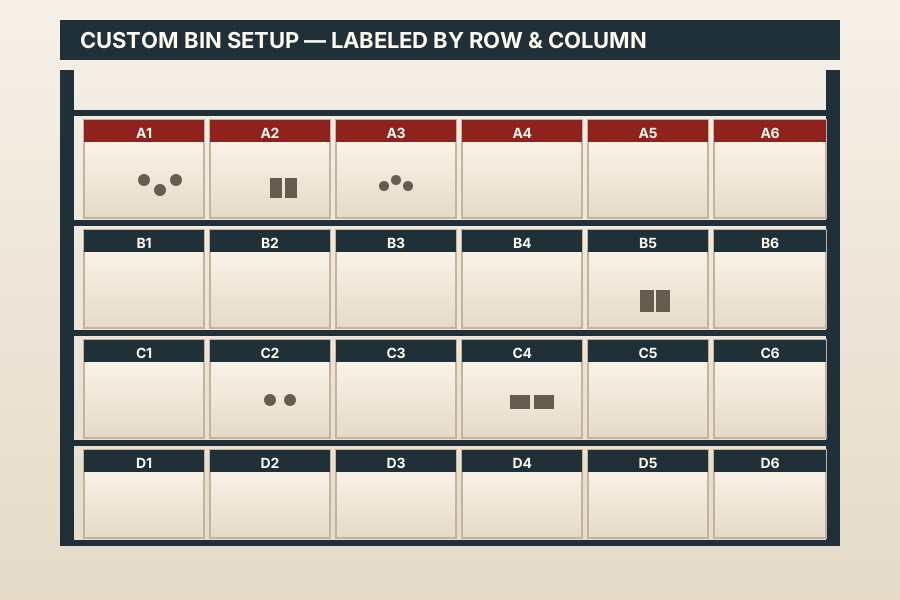
Two-bin flow is one of the most practical methods for recurring hardware. One bin stays active while a second bin is held in reserve. When the active bin empties, the reserve bin moves forward and the empty bin becomes a visible replenishment signal. This keeps the shortage from being discovered at the worst possible time: when the job is already waiting on a small part.
Labels matter just as much as bins. A clear bin address, part number, description, and barcode or QR-ready location can reduce guesswork during picking, cycle counting, receiving, and restocking. For teams managing thousands of small or similar-looking SKUs, a consistent label format helps prevent mix-ups between near-identical fasteners, fittings, or shop supplies.
Retmay can support custom bin setup as a standalone service or as part of a broader program with vendor managed inventory, custom kitting, and inventory control systems. The result is a cleaner path from item list to shelf location to reorder signal, which helps buyers, technicians, and maintenance teams spend less time chasing parts and more time keeping work moving.